
Hexagram Career
Hexagram 50 (The Caldron) in Career: I Ching Guidance for Work and Professional Life
What does Hexagram 50 (The Caldron) mean for your career? While THE WELL relates to the social foundation of our life, and this foundation is likened to the water that serves to nourish growing wood, the present hexagr... Learn how the I Ching guides professional decisions, leadership, timing, and workplace dynamics.
You've been working hard—putting in the hours, building your skills, contributing to projects—but something feels off. Perhaps you're producing good work that nobody seems to notice, or you're in a role that uses only a fraction of your abilities. Maybe you've achieved external success but sense that your career lacks deeper meaning or direction. This is precisely the kind of situation that Hexagram 50, The Caldron, speaks to.
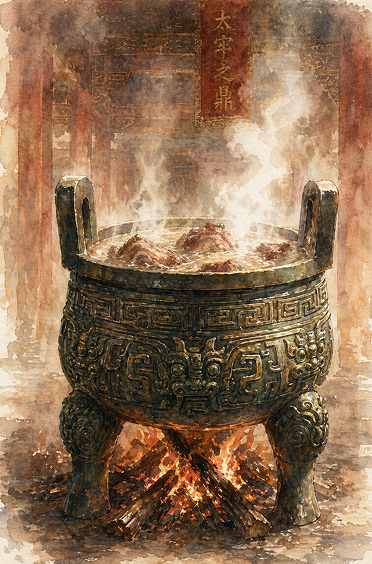
The Caldron is the fiftieth hexagram of the I Ching, and its judgment describes a vessel used for sacred offerings—a symbol of how raw materials are transformed into something nourishing and consecrated. The trigram structure places Fire (Li) above Wind (Xun), showing fire burning upward as wood feeds it from below. This is not about mere productivity or career advancement. It's about how your professional life can become a vessel for something greater: work that feeds both yourself and others, work that connects visible effort to invisible purpose.
If you've felt that your career is technically functional but spiritually flat, or that you're ready to move from simply doing your job to doing work that matters, you're in the right place. Hexagram 50 offers guidance for precisely this transition—from surviving professionally to thriving with intention.
Where This Guide Is Most Useful
- You're in a stable career role but feel an emptiness that material success hasn't filled, and you're wondering how to infuse your work with deeper significance.
- You're facing a career transition—a promotion, a new role, or a complete pivot—and want to ensure you're building on a solid foundation rather than chasing hollow achievements.
- You're leading a team or organization and need to create conditions where people's talents are fully used and their work feels meaningful, not just efficient.
Understanding The Caldron in Career & Work Context
The Caldron, in its classical form, was a bronze vessel used for cooking sacrificial offerings. The judgment makes an essential distinction: while Hexagram 48, The Well, represents the social foundation of life—the water that nourishes growing wood—Hexagram 50 represents the cultural superstructure. Here, wood feeds fire, and fire feeds spirit. In career terms, this means that your professional life has two layers. The first layer is survival: earning a living, meeting basic responsibilities, building competence. The second layer is consecration: using your work as a vehicle for something that transcends personal gain.
The Image of the hexagram describes fire depending on wood for its existence, and it draws a parallel to human life: there is a fate that lends power to life, and the task is to assign the right place to both life and fate, bringing them into harmony. In a work context, this speaks to the relationship between your innate talents and the opportunities available to you. The wood is your raw potential; the fire is what you actually produce. But the hexagram warns that this isn't automatic. You must actively tend the fire, choosing what to burn and what to let go.
The lower trigram, Wind (Xun), represents penetration and gentle influence—the slow, persistent work of building skills and relationships. The upper trigram, Fire (Li), represents clarity, illumination, and visibility. Together, they describe a process where steady, grounded effort (wind) gradually rises into recognized achievement (fire). But notice the direction: fire rises upward, consuming what's below. This hexagram asks you to consider what you're willing to let be consumed—your comfort, your ego, your attachment to outcomes—in service of something higher.
What makes The Caldron distinct from other hexagrams about work is its emphasis on sacrifice. The judgment says that "the highest earthly values must be sacrificed to the divine." This doesn't mean abandoning your career for a monastery. It means that within your professional life, you must be willing to let go of lesser goods for greater ones—trading approval for integrity, trading busyness for impact, trading security for purpose.
The Caldron teaches that career success is not an end in itself, but a vessel. The question is not "What can I get from my work?" but "What can my work become?"
How The Caldron Shows Up in Real Career & Work Situations
The Caldron appears when you're ready to move from a functional career to a meaningful one. This often shows up as a specific tension: you have the skills and position to do good work, but something prevents that work from being fully realized. The hexagram's six lines describe exactly how this tension manifests in professional life.
The most common Caldron scenario involves the feeling of being overlooked. You're producing excellent work—"delicious food," in the hexagram's metaphor—but the vessel's handle has been altered, making it impossible to lift and share what you've created. This is Line 3, which describes a person in an advanced culture who finds himself in a place where no one notices or recognizes him. The line's counsel is both sobering and hopeful: your gifts may go to waste for a time, but if you maintain something truly spiritual within yourself, "the time is bound to come, sooner or later, when the difficulties will be resolved."
Another common pattern is the leader who is inadequate to their responsibility. Line 4 describes a person with a difficult task who is not equal to it, partly because they surround themselves with inferior people. Confucius's commentary on this line is famously direct: "Weak character coupled with honored place, meager knowledge with large plans, limited powers with heavy responsibility, will seldom escape disaster." This is a warning against accepting roles you haven't grown into, or building teams that reinforce your weaknesses rather than complementing them.
The most promising pattern appears in Lines 5 and 6. Line 5 shows a leader who is approachable and modest, and as a result finds strong helpers who complement their work. This is the Caldron in its proper function: the vessel is well-made, the fire is properly tended, and the food nourishes everyone. Line 6 describes the "carrying rings" of the vessel, now made of jade—hard yet lustrous. This represents the sage who imparts wisdom with mildness and purity. In career terms, this is the mentor, the teacher, the person whose influence makes others more capable.
What makes these patterns specifically relevant to modern careers is their focus on recognition and contribution. The Caldron isn't about climbing ladders or accumulating titles. It's about ensuring that your work actually reaches people—that it's served, not just prepared. This is why the hexagram begins with Line 1, which depicts a vessel turned upside down to be cleaned. Even the lowliest person, if willing to purify themselves, can find a place where their work bears fruit.
The Caldron reveals that career stagnation is often not about lack of ability, but about misalignment between what you offer and the vessel you're offering it through.
From Reading to Action: Applying The Caldron
Moving from understanding The Caldron to applying it requires examining your current professional situation through the lens of the hexagram's specific lines. Each line offers a diagnostic question and a direction for action.
If you identify with Line 1—feeling lowly or undervalued—your action is purification, not self-promotion. The line says that turning the vessel upside down to clear out refuse does no harm. In practical terms, this means taking stock of what you're carrying that doesn't belong: outdated skills, resentments, unrealistic expectations. Clear those out first. Then, like the concubine who gains honor through her son, focus on producing something tangible. Don't worry about status; worry about output.
If Line 2 resonates—you're experiencing envy or disfavor despite doing good work—the counsel is to limit yourself to actual achievements. The more you focus on what you've concretely produced, the less harm envy can do. Don't get drawn into defending your reputation. Let your work speak, and let the gossip exhaust itself.
Line 3, the line of being overlooked, requires the most patience. The advice is to ensure you possess "something truly spiritual"—in career terms, a core competency or insight that is genuinely valuable, regardless of whether anyone currently recognizes it. Then wait. The line promises that "sooner or later, the difficulties will be resolved." The image of falling rain symbolizes release of tension. Your job is to tend the fire and keep the food warm until the meal can be served.
For those in leadership positions, Lines 4, 5, and 6 offer a progression. Line 4 warns against taking on responsibilities you're not ready for. If you're in over your head, the action is to step back, strengthen your foundation, and change your company. Line 5 shows the right way to lead: with approachability and modesty, actively seeking helpers who complement your weaknesses. Line 6 shows the culmination: becoming someone who imparts wisdom with the hardness and luster of jade—strong enough to hold firm, gentle enough to teach.
The practical application of The Caldron always comes back to the same question: What are you sacrificing? The hexagram demands that something be offered up. In career terms, this might mean sacrificing the need to be right, the comfort of staying invisible, the safety of a role you've outgrown, or the approval of people who don't share your values. What you receive in return is not guaranteed success, but something more valuable: work that is consecrated, work that feeds your spirit as it feeds others.
The Caldron's wisdom is not about getting what you want, but about becoming worthy of what you're given—and then giving it away.
Practical Examples
Example 1: The Overlooked Contributor
Situation: Maria is a senior data analyst at a tech company. Her reports are consistently excellent, but she's never invited to the strategy meetings where her insights could make a difference. She feels like she's cooking gourmet meals that nobody tastes.
How to read it: This is Line 3 of The Caldron—the altered handle. The vessel is full of good food, but it can't be lifted. Maria's work is good, but she's in a position where the mechanism for sharing it is broken.
Next step: Maria needs to examine whether the "handle" is truly broken or merely different from what she expects. Instead of waiting to be invited, she could create a brief executive summary of her key findings and send it directly to decision-makers. The line's promise is that if she maintains the quality of her work, the difficulties will resolve. She should also consider whether she needs a different organization—one with a vessel designed to use what she offers.
Example 2: The Inadequate Leader
Situation: James was promoted to department head based on his technical skills, but he's struggling with the people management aspects. He's hired friends from his previous team rather than people with complementary strengths, and his department's performance is declining.
How to read it: This is Line 4—weak character with honored place, meager knowledge with large plans. James has accepted responsibility he wasn't ready for, and he's compounding the problem by surrounding himself with people who reinforce his weaknesses.
Next step: James needs to acknowledge his limitations and take concrete steps to address them. He should seek mentorship in leadership skills, and critically evaluate his team composition. The line's warning is severe—disaster is likely—but it's not inevitable. He can still change course by admitting his inadequacy and actively building the support structure he lacks.
Example 3: The Modest Leader Finding Helpers
Situation: Priya runs a mid-sized design firm. She's known for being approachable and humble despite her success. Recently, she's been approached by several talented people who want to work with her, and she's building a team that combines her vision with their specialized skills.
How to read it: This is Line 5—the leader who, through constant self-abnegation, finds strong helpers. Priya's modesty isn't weakness; it's the very quality that attracts capable people. The line warns her not to be led astray from this attitude.
Next step: Priya should formalize the mentorship and collaboration structures that are emerging naturally. She can create systems that allow her helpers to take ownership while she remains the steady vessel. The line promises success if she maintains her approachability and doesn't let ego or pressure change her style.
Common Mistakes
- Mistaking The Caldron for a promise of promotion. This hexagram is not about career advancement in the conventional sense. It's about making your work worthy of being offered. You may advance, but that's a byproduct, not the goal.
- Reading Line 1's "turning upside down" as a call to quit. Clearing out refuse doesn't mean abandoning your position. It means examining what you're carrying that doesn't serve your purpose—grievances, outdated methods, wrong motivations.
- Applying Line 4's warning as a reason to avoid responsibility. The line warns against taking on what you're not ready for, but readiness can be developed. The mistake is staying in over your head without changing course.
- Treating the hexagram's sacrificial language as literal self-denial. The sacrifice called for is of lesser values for greater ones, not of your well-being. You're not meant to burn out; you're meant to burn brightly.
Closing Reflection
The Caldron asks you to consider your career not as a ladder to climb, but as a vessel to fill. The question is not whether you're succeeding by external measures, but whether your work is worthy of being offered—whether it nourishes, whether it connects the visible to the invisible, whether it consecrates your talents to something larger than yourself. This is not a comfortable question, and The Caldron does not promise that the answer will be easy. But it does promise that if you tend the fire properly, keep the vessel clean, and maintain the right attitude of humility and purpose, the work will find its way to those who need it. And that, the judgment says, leads to great good fortune and success.
Sources & References
Zhouyi / I Ching primary text
The received text of the Book of Changes, including the Judgment, Image, and line statements.
The I Ching or Book of Changes, Richard Wilhelm / Cary F. Baynes
Princeton University Press translation used as a major English-language reference point for names, structure, and commentary framing.
The Sacred Books of China: The Texts of Confucianism, James Legge
Classical English reference used for comparative reading of source terminology and commentarial tradition.
The Classic of Changes, Richard John Lynn
Modern scholarly translation consulted for comparative interpretation and editorial cross-checking.
Related Hexagrams
Continue from this guide into specific hexagram study.
Related Guides
Continue with adjacent guides for more context and deeper study.