
Hexagram Career
Hexagram 28 (Preponderance of the Great) in Career: I Ching Guidance for Work and Professional Life
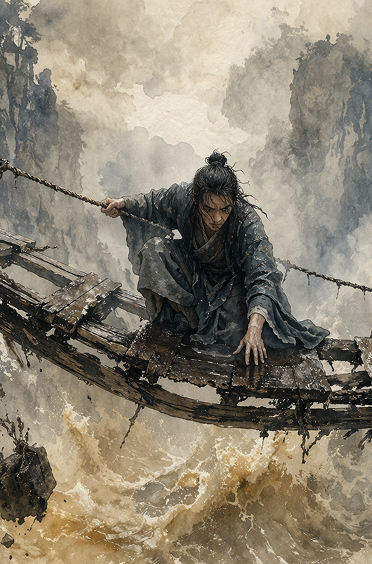
What does Hexagram 28 (Preponderance of the Great) mean for your career? The weight of the great is excessive. The load is too heavy for the strength of the supports. The ridgepole, on which the whole roof rests, sags to the breaking... Learn how the I Ching guides professional decisions, leadership, timing, and workplace dynamics.
Introduction
You know that feeling when you're carrying a project that's simply too big for the current structure supporting it? The deadlines are crushing, the team is stretched thin, and the foundation beneath your work is starting to show visible cracks. Perhaps you've taken on a promotion that demands more resources than you have, or you're leading an initiative where the expectations far exceed the practical capacity of your organization. This is the territory of Hexagram 28—a moment when the weight of the great has become excessive, and the ridgepole of your professional life is beginning to sag.
In the classical I Ching, Hexagram 28 (Preponderance of the Great) describes precisely this kind of extraordinary situation. The judgment speaks of a roof whose central beam is bending under a load too heavy for its supports. The upper trigram is Lake (Dui), representing joyousness and open expression, while the lower trigram is Wind (Xun), symbolizing gentle penetration and adaptability. Together they create a pattern of pressure that requires not brute force, but careful, intelligent navigation. The text tells us that "nothing is to be achieved by forcible measures"—a counterintuitive insight when everything in you wants to push harder.
If you've been feeling that your professional situation has become "too much"—too much responsibility, too much pressure, too much at stake—this guide is for you. Hexagram 28 doesn't offer escape from difficulty; it offers a way to move through exceptional times with wisdom, recognizing that the very excess of pressure contains the seed of transformation.
Where This Guide Is Most Useful
-
When you are in a leadership role where organizational expectations exceed available resources, and you must find a way to bridge the gap without breaking yourself or your team. This is the classic "ridgepole sagging" scenario—you are the central support, and the load is becoming unsustainable.
-
When you are considering a major career transition that feels risky or unprecedented, and you need to assess whether the extraordinary circumstances justify extraordinary measures. The hexagram speaks directly to moments when conventional career advice no longer applies.
-
When you are navigating a period of intense professional pressure where the usual rules of conduct seem inadequate, and you need guidance on how to proceed without causing a collapse. This includes restructuring, crisis management, or taking on a role that everyone else has avoided.
Understanding Preponderance of the Great in Career & Work Context
The core message of Hexagram 28 is that exceptional times require exceptional responses—but not the kind you might expect. The judgment is remarkably precise: "The ridgepole, on which the whole roof rests, sags to the breaking point, because its supporting ends are too weak for the load they bear." In career terms, this means the structure of your professional life—whether that's your team, your organization, your skillset, or your support network—is no longer adequate for what you're trying to carry.
What makes this hexagram so valuable for career guidance is its insistence that the solution lies not in adding more weight or pushing harder, but in understanding the nature of the imbalance. The trigram structure gives us the key: the inner trigram Wind (Xun) suggests gentle penetration, the ability to enter situations subtly and understand their deeper dynamics. The outer trigram Lake (Dui) represents the capacity to remain joyful and open even in difficult circumstances. Together, they point to a strategy of moving through the crisis with awareness rather than aggression.
The Image of the hexagram is particularly striking: "The lake rises over the treetops." This is a flood—an extraordinary situation where normal conditions are suspended. But the Image also tells us that such conditions are temporary. The tree (symbolized by Wind) stands firm even though it stands alone, and the lake (Tui) remains undaunted even if it must renounce the world. For your career, this means recognizing that the current pressure is not permanent, and that your task is to remain grounded and perceptive until the waters recede.
Perhaps the most important insight from the judgment is this: "For although the strong element is in excess, it is in the middle, that is, at the center of gravity, so that a revolution is not to be feared." In professional terms, this means that even when the situation feels overwhelming, the core of your strength—your competence, your values, your essential capabilities—remains intact. The problem is not that you lack ability, but that the supporting structures around you are insufficient.
How Preponderance of the Great Shows Up in Real Career & Work Situations
Let me describe some specific dynamics where Hexagram 28 becomes relevant. Perhaps the most common scenario is the "overloaded leader"—someone who has been promoted into a role where they are expected to deliver results without adequate authority, budget, or team support. The ridgepole here is the leader themselves, and the sagging comes from the gap between responsibility and resources. The danger is that you will try to compensate by working harder, taking on more, and ultimately burning out—which only accelerates the collapse.
Another recognizable pattern is the "structural crisis" in an organization. This might be a company that has grown too quickly, a department that has lost key personnel, or a project that has expanded beyond its original scope. Here, the excessive weight is not personal but systemic. The judgment's warning against forcible measures is crucial: trying to force the old structure to bear the new weight will only make things worse. Instead, the hexagram advises finding a "way of transition" as quickly as possible—which might mean restructuring, renegotiating deadlines, or even abandoning parts of the project to save the whole.
There's also the situation of the "individual contributor in over their head"—perhaps you've taken on a freelance contract that's too large, or you've committed to a deadline that's unrealistic. Hexagram 28 speaks to this with particular clarity in its first line, which advises extraordinary caution: "just as when setting a heavy thing down on the floor, one takes care to put rushes under it, so that nothing will break." This is not timidity; it's wisdom. In professional terms, it means investing in preparation, building in buffers, and being willing to ask for help before the crack becomes a break.
What makes these situations genuinely "Preponderance of the Great" rather than ordinary difficulty is the element of excess. This isn't just a hard day at work—it's a situation where the normal rules no longer apply. You can't solve it by working harder or following standard procedures. The hexagram's advice to "penetrate gently to the meaning of the situation" is a call to step back and understand what is actually happening, rather than reacting with the usual professional reflexes.
"Nothing is to be achieved by forcible measures. The problem must be solved by gentle penetration to the meaning of the situation." — The Judgment of Hexagram 28
From Reading to Action: Applying Preponderance of the Great
The real value of Hexagram 28 lies in its practical guidance for action. The moving lines offer specific advice for different stages of the crisis, and understanding where you are in the pattern is essential.
If you are at the beginning of an extraordinary undertaking—perhaps you're launching a risky new initiative or taking on a role that stretches your capabilities—the first line's advice about caution is paramount. "Exceptional enterprises cannot succeed unless utmost caution is observed in their beginnings and in the laying of their foundations." In practice, this means over-investing in preparation. Build in extra time for the initial phases. Secure commitments from stakeholders before you start. Create contingency plans. This may feel excessive, but the hexagram assures us that such caution is not a mistake.
The second line offers a strategy for renewal when the old structure is failing. The image is of an old poplar sprouting new roots—an extraordinary reanimation. In career terms, this might mean seeking out new alliances with people of lower rank or different backgrounds. If your current professional network is too rigid or hierarchical, look for fresh perspectives from junior colleagues, cross-functional partners, or even people outside your industry. The hexagram tells us that "in exceptional times one does well to join with the lowly, for this affords a possibility of renewal."
The third line is a warning against willfulness. "Plunging willfully ahead in times of danger only hastens the catastrophe." If you find yourself ignoring advice, pushing through obstacles without adjusting your approach, or refusing to acknowledge the severity of the situation, you are in the territory of this line. The remedy is humility—actively seeking counsel and being willing to change course.
The fourth line offers a more positive option: through friendly relations with people of lower rank, a responsible person can become master of the situation. This is about building coalitions from the ground up. If you're in a leadership position, this means genuinely connecting with the people doing the actual work, listening to their concerns, and leveraging their insights. The warning attached to this line is equally important: if you misuse these relationships for personal advancement rather than the good of the whole, it will lead to humiliation.
The fifth line describes a dead end—a withered poplar that flowers only to exhaust itself. This is the danger of trying to solve an extraordinary problem with conventional means. In career terms, it might mean accepting a superficial promotion that doesn't address the underlying structural issues, or maintaining relationships with higher-ups while ignoring the need for renewal from below. The hexagram's advice is clear: this approach leads nowhere.
Finally, the sixth line presents the ultimate test: "There are things that are more important than life." In professional terms, this is about knowing when to sacrifice your position, your reputation, or even your career for something you believe in. This is not a line to take lightly—it describes a situation where the extraordinary has reached its climax, and the only honorable path is to give up everything for what is right. If you find yourself here, the hexagram offers no easy comfort, but it does offer clarity: some principles are worth more than success.
Practical Examples
Example 1: The Overloaded Project Manager
Situation: Maria is managing a software implementation that has grown far beyond its original scope. The client keeps adding requirements, her team is working 60-hour weeks, and the deadline is immovable. She feels like the ridgepole of the project, and she's starting to sag.
How to read it: This is a classic Hexagram 28 scenario. The weight of the great (the project's scope) is excessive for the supports (the team's capacity and the timeline). Maria's instinct is to push harder—more hours, more pressure. But the judgment warns against forcible measures. The inner trigram Wind suggests she needs to penetrate the situation gently: understand the client's real priorities, identify what can be deferred, and negotiate a realistic scope.
Next step: Maria should follow the advice of the first line and invest in extraordinary caution. She needs to document the current state honestly, present the risk of collapse to stakeholders, and propose a transition plan that reduces the load. This might mean sacrificing some features to save the project as a whole. The key is to act quickly—"find a way of transition as quickly as possible"—before the ridgepole breaks.
Example 2: The Executive in a Restructuring
Situation: David has been brought in to turn around a struggling division. The previous leadership left a mess—low morale, broken processes, and unrealistic performance targets. He's expected to deliver results in six months with the same team and budget.
How to read it: This is the "exceptional times" that Hexagram 28 describes. The structure of the division is the sagging ridgepole, and David is the one trying to hold it up. The temptation is to impose dramatic changes from the top—to be the strong leader who forces transformation. But the hexagram says the strong element is already in excess; adding more force will only worsen the situation.
Next step: David should follow the fourth line's advice: build relationships with people of lower rank. He needs to connect with the frontline employees who understand the real problems, not just the senior managers who created them. By listening and forming genuine alliances, he can identify the actual leverage points for change. The transition will be successful not through his authority, but through his ability to penetrate the meaning of the situation.
Example 3: The Freelancer Taking a Big Risk
Situation: Jenna is a freelance consultant who has been offered a contract that would double her income—but it requires her to deliver work in an area where she has limited experience. The client expects results quickly, and she's afraid that if she says no, she'll miss a career-defining opportunity.
How to read it: This is the territory of the first and second lines of Hexagram 28. The "great" that preponderates is the opportunity itself—it's larger than her current capacity. The judgment's image of the sagging ridgepole applies to her skills and experience: they are the supports that may not be strong enough for the load.
Next step: Jenna should follow the first line's advice about extraordinary caution. Before accepting, she needs to "put rushes under the heavy thing"—meaning she should invest in preparation. This could mean negotiating for a longer timeline, bringing in a subcontractor with the missing expertise, or creating a detailed learning plan before the project starts. She might also consider the second line's strategy: seeking renewal through alliance with someone "lower" in experience or status—perhaps a junior partner who has the technical skills she lacks. The caution is that if she plunges ahead willfully (third line), she risks damaging her reputation and her career.
"Exceptional enterprises cannot succeed unless utmost caution is observed in their beginnings and in the laying of their foundations." — First Line of Hexagram 28
Common Mistakes
-
Mistaking ordinary difficulty for Preponderance of the Great. Not every hard situation is an extraordinary one. The hexagram describes genuine excess—a load that is literally too heavy for the supports. If you apply its advice to routine professional challenges, you risk over-dramatizing normal stress and missing the opportunity for steady, incremental improvement.
-
Assuming "extraordinary measures" means aggressive action. The judgment explicitly warns against forcible measures. Many people read "extraordinary times require extraordinary action" and interpret that as permission to be forceful, decisive, or even ruthless. In fact, the hexagram counsels gentleness, penetration, and joyful adaptability. The extraordinary measure is not more force, but more wisdom.
-
Ignoring the supporting ends of the ridgepole. The problem in Hexagram 28 is not the ridgepole itself (which is strong in the middle) but the weak supports at either end. In career terms, this means the issue is often not your own competence but the structures around you—your team, your resources, your organization's culture, your support network. Focusing only on personal strength while neglecting these supports is a fundamental misreading.
-
Treating the situation as permanent. The Image of the lake rising over the treetops is a flood—an exceptional condition that will eventually recede. If you act as though the crisis will last forever, you'll make decisions that are appropriate for a permanent state but disastrous for a temporary one. The art of navigating Hexagram 28 is knowing that the extraordinary will pass, and your task is to endure and transition, not to build a new permanent structure in the middle of the flood.
Closing Reflection
Hexagram 28 asks us to recognize when the weight we're carrying has become genuinely excessive, and to respond not with more force but with more understanding. In your career, this might be the moment when you finally admit that the project is too big, the role is too demanding, or the organization is too broken for conventional solutions. The extraordinary measure required is not heroism but humility—the willingness to step back, penetrate the situation gently, and find a path of transition before the ridgepole breaks. Remember that the lake rises over the treetops only temporarily; your task is to remain standing, joyful even in difficulty, until the waters recede and you can rebuild on firmer ground. The strength you need is already at your center; what requires attention are the supports at either end.
Frequently Asked Questions
Sources & References
Zhouyi / I Ching primary text
The received text of the Book of Changes, including the Judgment, Image, and line statements.
The I Ching or Book of Changes, Richard Wilhelm / Cary F. Baynes
Princeton University Press translation used as a major English-language reference point for names, structure, and commentary framing.
The Sacred Books of China: The Texts of Confucianism, James Legge
Classical English reference used for comparative reading of source terminology and commentarial tradition.
The Classic of Changes, Richard John Lynn
Modern scholarly translation consulted for comparative interpretation and editorial cross-checking.
Related Hexagrams
Continue from this guide into specific hexagram study.
Related Guides
Continue with adjacent guides for more context and deeper study.