
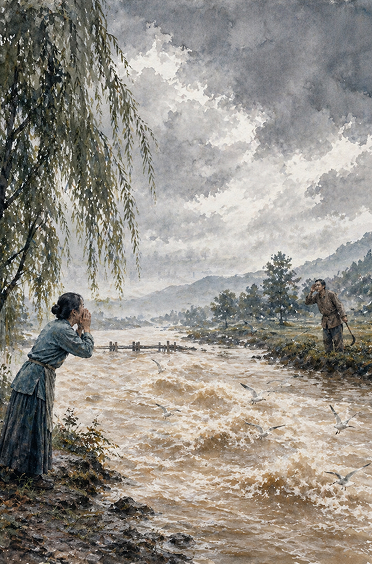
Hexagram Study
Hexagram 64 (Before Completion) in Study: I Ching Guidance for Learning and Growth
What does Hexagram 64 (Before Completion) teach about study and learning? The conditions are difficult. The task is great and full of responsibility. It is nothing less than that of leading the world out of confusion back to order. Bu... See how the I Ching guides intellectual growth, skill development, and the discipline of deepening knowledge.
You’ve been working toward something for months—perhaps a certification, a research project, or a difficult subject you’ve struggled to master. The finish line is visible, yet something remains unsettled. You feel the weight of what’s still undone, and the closer you get, the more precarious everything seems. This is the territory of Hexagram 64, known as Before Completion—the final hexagram in the I Ching, and the one that speaks most directly to the tension between almost-there and not-yet-done.
The Judgment of Hexagram 64 describes a situation where “the conditions are difficult. The task is great and full of responsibility.” The trigram structure—Fire above, Water below—shows forces moving in opposite directions: fire naturally rises, water naturally falls. Nothing is aligned yet. And yet the text promises success, because there is a goal that can unite these scattered energies. For anyone engaged in serious study, this hexagram offers a map through the most challenging phase of learning: the final stretch before completion.
Where This Guide Is Most Useful
- You are nearing the end of a long-term learning project—a thesis, a professional exam, or a complex skill—and the final steps feel more daunting than the beginning did.
- You have experienced repeated setbacks or false starts in your studies, and you need guidance on when to push forward and when to hold back.
- You sense that your current approach is not working, but you are unsure how to realign your efforts with the nature of the material you are trying to master.
Understanding Before Completion in Learning & Study Context
The name Before Completion is not a warning to give up. It is an accurate description of a phase in any learning journey: the moment when the old structure of understanding has broken down, but the new one has not yet fully formed. In the I Ching, this hexagram follows Hexagram 63, After Completion, which represents order achieved. But the Book of Changes ends not with completion, but with this hexagram—because every end contains a new beginning, and true mastery is never static.
The Image of Hexagram 64 tells us that when fire is above and water below, “their effects take opposite directions and remain unrelated.” In study, this mirrors the experience of having theoretical knowledge (fire, which rises) disconnected from practical application (water, which flows downward). You may understand a concept intellectually but cannot apply it. Or you may have hands-on experience but lack the conceptual framework to explain what you are doing. Before Completion is the hexagram of this disconnect, and it calls for deliberate investigation: “If we wish to achieve an effect, we must first investigate the nature of the forces in question and ascertain their proper place.”
The Judgment introduces the famous image of the old fox walking over ice. The fox’s ears are constantly alert to the cracking of the ice, as it carefully searches out the safest spots. The young fox, lacking this caution, goes ahead boldly and gets its tail wet when it is almost across the water. For the student, this is a direct warning against the hubris of thinking you are finished when you are not. The final stage of learning demands a different kind of attention—not the energy of the beginner, but the wariness of the experienced traveler who knows that the most dangerous part of the journey is the last mile.
How Before Completion Shows Up in Real Learning & Study Situations
The pattern of Hexagram 64 appears most often in the final phase of a significant learning project, when the student has accumulated enough knowledge to see how much they do not yet know. This is not impostor syndrome; it is the genuine recognition that mastery requires integration, and integration has not yet happened. The student may have passed all the exams, written all the chapters, or completed all the exercises, yet still feel that something essential is missing.
This hexagram also describes the experience of studying a subject that requires the synthesis of opposing modes of thinking. A student learning both the theory and practice of a discipline—say, medical diagnosis or software architecture—may find that these two forms of knowledge remain separate. The fire of abstract reasoning does not connect to the water of concrete application. The I Ching advises that we must “first investigate the nature of the forces in question and ascertain their proper place.” This means recognizing that theory and practice are not enemies; they are complementary forces that need to be brought into relationship.
Another common manifestation of Hexagram 64 in study is the experience of being almost finished with a project, only to discover a fundamental flaw in your approach. Perhaps your research methodology was flawed, or you misunderstood a key concept early on, and now the entire structure is shaky. The natural impulse is to rush to fix it, to push through to completion as quickly as possible. But the hexagram warns: “At first, one must move warily.” The old fox does not dash across the ice; it tests each step. In study, this means being willing to go backward, to revisit foundational material, and to slow down even when you are desperate to be done.
Before Completion teaches that the final stage of learning is not a sprint to the finish line, but a careful negotiation with the remaining unknowns.
From Reading to Action: Applying Before Completion
The six moving lines of Hexagram 64 provide a detailed progression for how to act when you are in this phase. They are not predictions; they are descriptions of typical stages in the process of moving from chaos to order.
Line 1 warns against the temptation to advance yourself as rapidly as possible in order to accomplish something tangible. In study, this means resisting the urge to take shortcuts, skip steps, or claim completion before you have truly integrated the material. The line says that such enthusiasm leads only to failure and humiliation. The wise action is to hold back, to spare yourself the opprobrium of failure by waiting until you are truly ready.
Line 2 addresses the patience required when the time to act has not yet come. But this is not idle waiting. The text says you must “develop in yourself the strength that will enable you to go forward.” You need a vehicle to effect the crossing—but for now, you must use the brakes. In practical terms, this might mean building foundational skills, gathering resources, or seeking mentorship before attempting the final push. Do not fall asleep and lose sight of the goal. Remain strong and steadfast in your resolve.
Line 3 describes the moment when the time of transition has arrived, but you lack the strength to complete it alone. If you try to force it, disaster will result. The solution is to engage the energies of able helpers. In study, this means seeking collaboration—a study group, a tutor, a writing partner, or a mentor who can provide the missing piece. Cross the great water together.
Line 4 is the time of struggle. The transition must be completed, and you must make yourself strong in resolution. The text speaks of a fierce battle to break the forces of decadence—in learning, this is the battle against your own bad habits, procrastination, and self-doubt. Now is the time to lay the foundations of power and mastery for the future. Do not give in to misgivings.
Line 5 marks the victory. The power of steadfastness has not been routed. Success has justified the deed. The light of a superior personality shines forth—in study, this is the moment when your hard-earned knowledge becomes visible to others. You have crossed over.
Line 6 offers a final note of caution. In the dawning of the new time, friends gather in mutual trust, and the time of waiting is passed in conviviality. But do not get drunk on your success. If you become intemperate, you forfeit the favorableness of the situation. In study, this means not resting on your laurels, but recognizing that every completion is a new beginning.
The six lines of Hexagram 64 map the journey from impatient eagerness, through patient preparation and collaboration, to victorious completion and humble new beginning.
Practical Examples
Example 1: The Dissertation Writer in the Final Months
Situation: Maria is a doctoral candidate who has completed all her research and is now writing the final chapters of her dissertation. But every time she sits down to write, she feels paralyzed. She knows the material, but she cannot seem to synthesize it into a coherent argument. She is tempted to rush through the writing just to be done.
How to read it: This is Hexagram 64 in its pure form. Maria has the fire of knowledge, but it is not connecting to the water of expression. The Judgment’s warning about the young fox applies directly: if she rushes, she will get her tail wet. She needs to move warily, like the old fox.
Next step: Follow the guidance of Line 2. Do not wait idly, but develop the strength to go forward. This might mean creating an outline that bridges her research and her argument, seeking feedback from her advisor, or writing a single chapter at a time without worrying about the whole. Use the brakes on your strength—slow down to speed up.
Example 2: The Professional Studying for a Certification Exam
Situation: James has been studying for a difficult professional certification for six months. He has passed all the practice exams, but he still feels uncertain about the material. He is tempted to take the real exam immediately, hoping that his test-taking skills will carry him through.
How to read it: This is the situation described in Line 1 of Hexagram 64. The temptation to advance oneself rapidly is strong, but the time for achievement has not yet arrived. The enthusiasm of the young fox will lead to failure.
Next step: Hold back. Spare yourself the humiliation of failure by waiting until you are truly ready. Identify the specific areas where you feel uncertain, and study them deliberately. This is not procrastination; it is the caution of the old fox. When you are ready, you will know—because you will not feel the need to rush.
Example 3: The Student Learning a Complex New Skill
Situation: Priya is learning to code in a new programming language. She understands the syntax and can follow tutorials, but she cannot build anything original. The theory (fire) and the practice (water) remain disconnected.
How to read it: This is the Image of Hexagram 64 made visible. Fire is above, water is below, and they are not relating. The I Ching advises that we must first investigate the nature of the forces and ascertain their proper place.
Next step: Do not try to force the connection. Instead, follow the guidance of Line 3: engage the energies of able helpers. Find a mentor, join a coding group, or pair program with someone more experienced. Cross the great water together. The connection between theory and practice will emerge through collaboration, not solitary struggle.
Common Mistakes
- Confusing “before completion” with “failure.” The name of this hexagram is not a judgment. It is a description of a phase. Being in the Before Completion stage means you are on the right track, not that you have failed. The mistake is to interpret the difficulty as a sign that you should give up.
- Rushing to finish. The most common error when studying this hexagram is to ignore its central warning: move warily, like the old fox. Students often push through the final phase with frantic energy, hoping to force completion. This almost always leads to the young fox’s fate—getting the tail wet when almost across.
- Waiting passively instead of preparing actively. Line 2 warns against idle waiting without thought of the morrow. Some readers misinterpret the hexagram’s call for caution as a reason to do nothing. But the I Ching says you must develop the strength that will enable you to go forward, even as you use the brakes. Preparation is not the same as paralysis.
- Ignoring the need for collaboration. Line 3 explicitly says that when you lack the strength to complete the transition alone, you must engage the energies of able helpers. Many students in the Before Completion phase isolate themselves, believing that asking for help is a sign of weakness. In fact, it is the wise action prescribed by the hexagram.
Closing Reflection
Hexagram 64 reminds us that the most dangerous moment in any learning journey is not the beginning, when everything is new and exciting, but the end, when we are tired and eager to be done. The old fox knows this. It does not dash across the ice; it listens, tests, and moves with deliberate care. For the student, this hexagram offers both a warning and a promise: the warning that rushing leads to failure, and the promise that careful, patient action leads to success. Before Completion is not a state to escape; it is the final, crucial phase of growth. Honor it by moving warily, and you will cross safely to the other side.
Sources & References
Zhouyi / I Ching primary text
The received text of the Book of Changes, including the Judgment, Image, and line statements.
The I Ching or Book of Changes, Richard Wilhelm / Cary F. Baynes
Princeton University Press translation used as a major English-language reference point for names, structure, and commentary framing.
The Sacred Books of China: The Texts of Confucianism, James Legge
Classical English reference used for comparative reading of source terminology and commentarial tradition.
The Classic of Changes, Richard John Lynn
Modern scholarly translation consulted for comparative interpretation and editorial cross-checking.
Related Hexagrams
Continue from this guide into specific hexagram study.
Related Guides
Continue with adjacent guides for more context and deeper study.