
How To
How to Use the I Ching: A Practical Workflow for Questions and Readings
Understand how to use the I Ching for reflection, decision making, and divination with a practical workflow for asking questions and reading results.
You’ve heard the I Ching described as an ancient oracle, a philosophical masterpiece, or a tool for divination. Maybe you’ve even flipped through a copy of the Wilhelm/Baynes translation, only to feel overwhelmed by cryptic hexagram texts and references to “the superior person.” You want something practical—a way to engage with the Book of Changes that helps you see your situation more clearly, make better decisions, and navigate uncertainty with greater poise. This guide is for you.
The I Ching is not a fortune-telling device. It is a mirror for pattern recognition, a discipline for timing and conduct, and a method for clarifying what you already sense but cannot yet articulate. When used well, it transforms vague anxiety into focused attention. When misused, it becomes a crutch for wishful thinking. This article will give you a complete workflow—from forming a question to interpreting the response—grounded in the logic of the hexagrams themselves, with particular attention to Hexagram 5, Waiting [Nourishment] (Xu), which teaches the art of patience and readiness that every reading requires.
By the end of this guide, you will know how to use the I Ching as a consistent practice, not a sporadic emergency tool. You will understand how to ask questions that yield insight, how to read hexagram texts without getting lost in abstraction, and how to apply the wisdom to real decisions, relationships, and periods of uncertainty.
Where This Guide Is Most Useful
- You are searching for a practical way to understand how to use the I Ching without getting lost in abstract commentary. You want a method, not mysticism—something you can apply tomorrow morning with a real question on your mind.
- You want a reading or study method that connects symbolic language to a real decision, relationship, or period of uncertainty. You are tired of vague interpretations and want to see how hexagram structures map onto your actual life.
- You are looking for guidance that stays grounded enough to use, but still respects the logic of the Book of Changes. You want the classical tradition, not New Age clichés, and you want to build a practice that deepens over time.
The Core Workflow: Asking, Receiving, and Reflecting
What a Proper Reading Actually Is
A reading of the I Ching is not a conversation with a supernatural entity. It is a structured act of self-examination using a classical text that encodes patterns of change. The hexagrams—64 in total—represent archetypal situations, each composed of six lines that move from bottom to top, describing a process of development. The trigrams (upper and lower) give additional context: the lower trigram often represents your inner state or the situation’s foundation, while the upper trigram represents the outer environment or the direction of movement.
The classical method involves casting yarrow stalks or tossing three coins six times to generate a hexagram, with changing lines that produce a second hexagram. This is not random; it is a systematic way of letting your unconscious mind interact with a symbolic framework. The I Ching’s own text, in the “Great Treatise” (Xici Zhuan), calls this process “opening the gate to things” and “completing the affairs of the world.” The key is to treat the response as a starting point for reflection, not a final verdict.
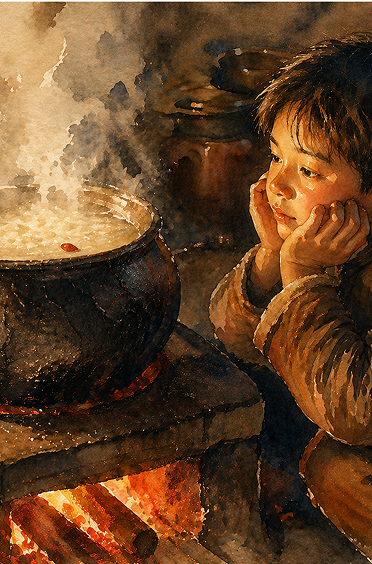
Hexagram 5, Waiting [Nourishment] (Xu), is especially relevant here. Its structure—upper trigram Water (Kan, the abyss, danger) over lower trigram Heaven (Qian, creative power)—shows a situation where strength is present but must pause before the obstacle. The Judgment says: “Waiting. If you are sincere, you will have light and success. Perseverance brings good fortune.” This hexagram teaches that the act of consulting the I Ching itself requires waiting: waiting for clarity, waiting for the right question to form, waiting for the response to settle before you interpret it. Rushing a reading is like trying to cross a river before the ice is thick enough.
How This Shows Up in Real Situations
Consider a common scenario: you are facing a career decision—whether to accept a promotion that requires relocation, or stay in a position that feels stable but stagnant. You cast the I Ching and receive Hexagram 29, The Abysmal [Water] (Kan), with a changing line in the third position. Your first reaction might be fear: “This hexagram is about danger and pits—does that mean the move will fail?”
This is where the practical workflow saves you. Hexagram 29 is not a prediction of doom; it is a description of a situation that requires careful, repeated action. The third line says: “Coming and going, pit upon pit. In danger like this, first pause and act only when it is safe. Do not act this way and you will only create confusion.” The reading is not telling you to reject the promotion. It is telling you that the situation involves real risks, and that the wise course is to proceed with caution, gather more information, and test the waters before committing.
The real value of a reading lies in how it reframes your problem. Before the reading, you were stuck in a binary: move or stay. After the reading, you see a third option: investigate thoroughly, negotiate terms, visit the location, and then decide. The I Ching has not given you an answer; it has given you a process.
From Understanding to Application
To build a consistent practice, follow this three-part workflow:
Step 1: Formulate your question. The most common mistake is asking yes/no questions or questions that seek prediction (“Will I get the job?”). Instead, ask process-oriented questions: “What is the nature of this career decision I am facing?” or “How should I approach this relationship difficulty?” or “What energy do I need to bring to this creative project?” The I Ching responds best to questions about conduct, timing, and attitude.
Step 2: Cast and record. Use the three-coin method for simplicity: assign heads a value of 3 and tails a value of 2. Throw six times, recording each result. A sum of 7 or 8 is a static line (7 = yang, 8 = yin); 6 or 9 is a changing line (6 = changing yin to yang, 9 = changing yang to yin). Write down the hexagram from bottom to top, then identify any changing lines and their resulting hexagram. The primary hexagram describes your current situation; the changing lines show where movement is occurring; the resulting hexagram shows the direction of development.
Step 3: Read and reflect. Start with the Judgment and Image of the primary hexagram. Read slowly. Notice what resonates and what puzzles you. Then read each changing line carefully, especially the line text itself. Finally, read the Judgment of the resulting hexagram. Do not force an interpretation. Sit with the text for a day if possible. Write down what comes to mind. The I Ching works best when you let it work on you, not when you try to dominate it with your will.
Takeaway: A proper reading is a dialogue between your situation and a symbolic pattern. The hexagram does not tell you what will happen; it tells you what is happening now and how to conduct yourself within it.
Practical Examples
Example 1: A Relationship in Uncertainty
Situation: You have been dating someone for six months, and the relationship feels stuck. You are unsure whether to push for commitment or step back. You ask: “What is the deeper pattern in this relationship right now?” You receive Hexagram 4, Youthful Folly (Meng), with a changing line in the second position.
How to read it: Hexagram 4 is about inexperience and the need for guidance. Its upper trigram is Mountain (Gen, stillness) over lower trigram Water (Kan, danger)—a situation where you are in over your head but can learn if you seek the right teacher. The second line says: “To bear with fools in kindness brings good fortune. To know how to take women brings good fortune. The son is capable of taking charge of the household.” This line suggests that the relationship is not failing; it is in a phase of learning. The “fool” is not a person but the situation itself—neither of you yet knows how to navigate this stage. The line advises patience and kindness rather than force.
Next step: Instead of demanding clarity or withdrawing in frustration, schedule a calm, honest conversation about what each of you needs to feel secure. Approach it as mutual learning, not negotiation. The I Ching is telling you that the relationship needs teaching, not ultimatums.
Example 2: A Creative Block
Situation: You are a writer who has not been able to produce meaningful work for three months. You ask: “What is blocking my creative energy, and how should I move forward?” You receive Hexagram 5, Waiting [Nourishment] (Xu), with a changing line in the fourth position.
How to read it: Hexagram 5 is directly about waiting—not passive waiting, but the active, nourishing kind. The fourth line says: “Waiting in blood. Get out of the pit.” This line describes a moment when waiting has become painful; the “blood” suggests tension has built to a breaking point. But the line also says to get out of the pit—meaning the waiting has served its purpose, and now is the time to emerge. The hexagram’s Image says: “Clouds rise up to heaven. The image of Waiting. Thus the superior person eats and drinks, is joyous and of good cheer.” This is not about forcing creativity; it is about nourishing yourself—rest, play, good food, time in nature—until the clouds naturally release their rain.
Next step: Stop trying to write for one week. Instead, fill your time with activities that replenish you: long walks, cooking, reading for pleasure, time with friends. Trust that the creative impulse will return when you have built enough inner substance. The I Ching is telling you that the block is not a sign of failure but a necessary fallow period.
Example 3: A Major Financial Decision
Situation: You are considering investing a significant sum in a friend’s startup. The opportunity feels exciting but risky. You ask: “What is the essential nature of this investment decision?” You receive Hexagram 26, The Taming Power of the Great (Daxu), with a changing line in the fifth position.
How to read it: Hexagram 26 is about accumulating strength through restraint. Its upper trigram is Mountain (Gen, stillness) over lower trigram Heaven (Qian, creative power)—a mountain holding back creative energy, building it up for a greater release. The fifth line says: “The tusk of a gelded boar. Good fortune.” This obscure image describes a boar whose aggressive potential has been tamed, making it useful rather than dangerous. The line suggests that the investment itself is not the problem, but the enthusiasm behind it needs to be tempered. The energy is real, but it must be directed rather than released impulsively.
Next step: Before committing any money, insist on seeing a detailed business plan, financial projections, and a clear exit strategy. Negotiate terms that protect your downside. The I Ching is not saying no to the investment; it is saying that the wise course is to tame your excitement with discipline. If the deal is sound, it will withstand scrutiny.
Takeaway: Each reading gives you a specific lens for seeing your situation. The hexagram text is not a puzzle to solve but a framework for clearer perception.
Common Mistakes
- Asking the same question repeatedly until you get an answer you like. The I Ching is not a vending machine. Asking the same question three times in a week shows that you are not ready to hear the response. Wait at least a month before revisiting the same issue.
- Ignoring the changing lines and reading only the hexagram name. The changing lines are where the action lives. They show what is in motion, what needs attention, and where transformation is possible. A reading without the changing lines is like reading a map without the route markers.
- Treating the text as literal prediction rather than symbolic guidance. When the I Ching says “danger,” it does not mean your car will crash tomorrow. It means the situation requires caution. When it says “good fortune,” it does not mean a windfall is coming. It means you are aligned with the pattern of the moment. Read symbols as patterns, not prophecies.
- Over-interpreting or forcing meaning. If the text seems irrelevant to your situation, step back. Sometimes the I Ching is telling you that you are asking the wrong question. Sometimes it is pointing to something you have not considered. Do not twist the words to fit your expectations. Let the dissonance teach you.
Closing Reflection
The I Ching is not a shortcut to certainty. It is a discipline for living with uncertainty more skillfully. Every hexagram, every changing line, every trigram relationship is an invitation to see your situation from a different angle—to recognize where you are forcing, where you are waiting, where you are nourishing, and where you are obstructing yourself. The workflow described here is not a magic formula; it is a practice that deepens with time, patience, and honest self-reflection. If you approach the Book of Changes with sincere questions and a willingness to be taught, it will reward you not with predictions, but with clarity. And in the end, clarity is the only real guidance we ever need.
Sources & References
Zhouyi / I Ching primary text
The received text of the Book of Changes, including the Judgment, Image, and line statements.
The I Ching or Book of Changes, Richard Wilhelm / Cary F. Baynes
Princeton University Press translation used as a major English-language reference point for names, structure, and commentary framing.
The Sacred Books of China: The Texts of Confucianism, James Legge
Classical English reference used for comparative reading of source terminology and commentarial tradition.
The Classic of Changes, Richard John Lynn
Modern scholarly translation consulted for comparative interpretation and editorial cross-checking.
Related Hexagrams
Continue from this guide into specific hexagram study.
Related Guides
Continue with adjacent guides for more context and deeper study.